
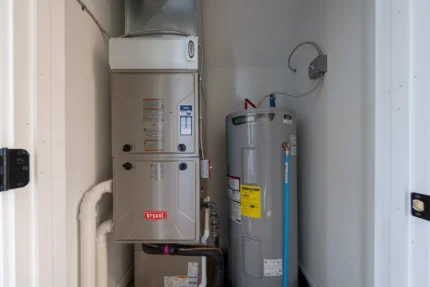
When your heating system starts acting up during a cold snap, you need a professional who makes the whole experience as smooth as possible.
At Kombi’s Heating and Cooling, we understand that investing in a new furnace is a big decision. That’s why we’re committed to giving you honest advice, transparent pricing, and furnace installation that fits your schedule.
We’re here to help homeowners throughout Portland OR and Vancouver WA stay warm without the stress, whether you’re dealing with an aging system that’s on its last legs, or you simply want to upgrade to something more efficient.
What to Expect During the Furnace Installation Process
Here’s a straightforward breakdown of what happens from start to finish:
- Assessment and Preparation: Before any work begins, we’ll evaluate your existing ductwork, venting, and the space where your new furnace will be installed. We’ll also make sure the workspace is ready and secure any necessary permits required by local building codes.
- Removal of the Old Furnace: Once everything is prepped, we’ll disconnect your existing unit from the gas and electrical systems and remove it safely in accordance with local codes.
- Installation of the New Furnace: Your new furnace is positioned and connected to the gas lines, electrical wiring, and venting. If any ductwork adjustments are needed to maximize airflow and system performance, we’ll handle those as well.
- Testing and Calibration: Before we call the job complete, our technician will verify airflow, temperature output, and all safety switches to ensure your new furnace is operating at peak efficiency.
- Final Walkthrough: Finally, we’ll walk you through how to operate your new thermostat and answer any questions you have about maintaining your system. We want you to feel confident and comfortable with your new furnace before we leave.
A standard furnace installation generally takes about one day. If your project involves installing new ductwork or adding on features like air purifiers, the timeline may extend slightly. We’ll give you a clear estimate of the timeframe before we begin.
How to Prepare Your Home for Furnace Installation
While we handle all the technical work, there are a few simple things you can do to help the installation go smoothly:
- Clear a path to your furnace area so our technicians can move equipment easily.
- If you have pets, securing them in a separate room keeps them safe and out of the way.
- Placing drop cloths over flooring near the installation site can help protect your home from any debris.
How to Choose the Right Furnace for Your Home
You’ll want to consider factors like efficiency ratings, sizing, and compatibility with your existing HVAC equipment:
- Efficiency Ratings: Furnace efficiency is measured by annual fuel utilization efficiency (AFUE). So a furnace with a 95% AFUE rating, for example, turns 95% of its fuel into heat. Higher efficiency means lower operating costs, but it also typically means a higher purchase price. We’ll help you find the sweet spot for your budget and our local climate.
- Proper Sizing: A furnace that’s too small will struggle to heat your home and wear out faster. One that’s too large will cycle on and off frequently, wasting energy and creating uneven temperatures. During the assessment phase of your furnace installation, we’ll evaluate your home’s square footage, insulation, ductwork, and other factors to recommend the right-sized system.
- Compatibility: Can you replace just the furnace without replacing your air conditioning unit? In many cases, it’s ‘yes’. But the two systems need to be compatible to achieve optimal energy efficiency. If your AC is also aging, it might make sense to replace both at once.
Your Furnace Options by Fuel Type
Natural Gas Furnaces
Natural gas furnaces are a common choice for homeowners in colder climates like the Pacific Northwest, and for good reason. They heat quickly and evenly, even during the harshest winter weather. Natural gas is also relatively inexpensive compared to other fuel sources, and modern gas furnaces offer excellent efficiency ratings.
The main considerations are that they require ductwork throughout the home and have a higher environmental impact than some alternatives.
Electric Furnaces
If your home doesn’t have access to natural gas lines, an electric furnace might be the right fit. These units are simple to install and don’t require venting, which can make the furnace installation process more straightforward. They’re also typically the least expensive to purchase upfront and require less maintenance.
However, electric furnaces are generally the most costly to operate and take longer to heat a space, making them better suited for backup heating systems.
Oil Furnaces
Oil furnaces provide powerful heat output, which makes them an option for homes in areas without natural gas service. While they’re less common today (particularly in the Portland OR and Vancouver WA area) they can still be found in some homes.
The main drawback is that oil prices fluctuate, so your heating costs can be unpredictable from season to season. Oil furnaces also tend to be less efficient than natural gas models.
Propane Furnaces
For homeowners who live off the natural gas grid but want gas-like efficiency, propane furnaces are worth considering. Propane burns cleanly and can provide excellent heating performance. These furnaces can also be more compact, making them ideal for smaller homes.
If you currently have a natural gas furnace, it can often be converted to run on propane with a relatively low-cost conversion kit.
Ready to Get Started?
Reach out to us today, and we’ll get back to you as soon as possible. Just fill out our contact form or give us a call.

"*" indicates required fields

How Do You Know When It’s Time for a Furnace Replacement?
Trying to decide between a furnace repair versus springing for an entirely new replacement furnace? Each case is different, but some signs you should look for include frequent and costly repairs, strange noises, visible wear and/or damage, rising energy bills, uneven heating, a cracked heat exchanger, and changes in humidity.
Most furnaces should be replaced every 15 to 20 years. While some units can push past that mark with meticulous maintenance, efficiency drops significantly after the 15-year point, and repair needs tend to pile up.
When Is the Best Time to Replace My Furnace?
The best time for furnace replacement is during spring or fall. These shoulder seasons mean heating demand is lower, so you’re not scrambling to get a new system installed during a cold snap.
Can’t I Replace a Furnace Myself?
No, furnace replacement is not a DIY project. It requires specialized training to safely connect natural gas lines, electrical wiring, and venting systems in compliance with local building codes. Improper installation can create serious safety hazards, including gas leaks and carbon monoxide exposure.
Beyond safety concerns, a professionally installed furnace will perform better and last longer than one that’s been improperly set up. When you work with a licensed professional like Kombi’s Heating and Cooling, you also get the peace of mind that comes with warranties and accountability.
We’ll Help You Get Ready for the Colder Months
Dealing with furnace issues isn’t anyone’s idea of a good time, but it doesn’t have to be a headache. If you’re noticing signs that your furnace is struggling, or if you’re ready to upgrade to a more efficient system, reach out to us today.
At Kombi’s Heating and Cooling, we’re committed to making the whole experience as smooth and painless as possible. We’re your neighbors in the Portland OR and Vancouver WA area, and we care about keeping our community warm and comfortable.
Give us a call at 971-201-2513 or fill out our contact form here for a free estimate. We’ll help you find the right new furnace for your home and get it installed quickly and professionally.


