
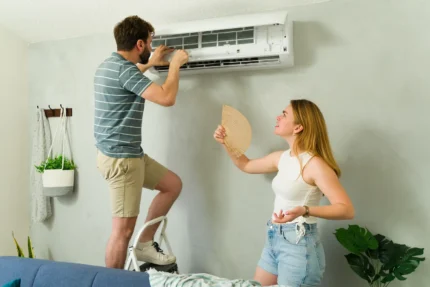
When summer hits the Pacific Northwest, your air conditioner becomes your best friend. But what happens when it starts acting up? Maybe it’s making weird noises, blowing warm air, or maybe your energy bill just tripled for no obvious reason.
We get it. AC problems are frustrating, especially when temperatures are climbing, and you just want to relax in a cool home. Thankfully, most common AC problems have straightforward solutions. Some you might even handle yourself, while others need a professional touch.
At Kombi’s Heating and Cooling, we’ve been helping homeowners throughout Vancouver WA and Portland OR solve their air conditioner issues for over 10+ years. We’ve pretty much seen it all.
8 Common AC Problems and Solutions
Your Air Conditioner Won’t Turn On
This is one of the most common AC issues we get calls about. And honestly, it’s one of the most stressful.
What’s Usually Going On
A tripped circuit breaker is often the culprit. Your AC unit draws a lot of power, especially when it first kicks on. If there’s been a power surge or your electrical system is overloaded, the breaker might trip as a safety measure. Just head to your electrical panel and look for any switches that are in the middle position or flipped to “off.”
Other times, the problem is with the thermostat itself. Dead batteries, incorrect settings, or a malfunctioning thermostat can all prevent your system from starting.
When to Call a Professional
If you’ve checked the breaker and thermostat and everything looks fine, the issue might be deeper in the system. Faulty wiring, a bad capacitor, or compressor issues all require professional diagnosis and repair.
These aren’t DIY fixes, and attempting them without proper training can be dangerous and might void your warranty.
The Air Coming from Your Vents Isn’t Cold Enough
This is one of the most common home AC issues homeowners face. It’s incredibly frustrating because the system seems like it’s working, just not well.
What’s Usually Going On
- Dirty air filters are a big one. When filters get clogged with dust and debris, they restrict airflow. Your system has to work harder to push air through, and less of that air makes it to your living spaces at the right temperature. This is why we always recommend checking your filters monthly during heavy-use seasons.
- Another common cause is dirty or leaky ductwork. Over time, ducts can develop cracks, gaps, or disconnections. When this happens, the cold air your system produces escapes into your attic or walls instead of making it to your rooms. You’re essentially paying to cool spaces you never use.
- Low refrigerant levels can also cause weak cooling. Your AC needs the right amount of refrigerant to absorb heat from your home’s air. If there’s a leak and levels drop, the system can’t cool as effectively. You might also notice ice forming on the evaporator coils, which is a telltale sign of refrigerant issues.
How to Fix Common Air Conditioner Issues Like This
Start with the simple stuff. Replace your air filter if it’s dirty, make sure all your vents are open and unobstructed by furniture or curtains, and check that your thermostat is set correctly.
If those steps don’t help, you’re likely looking at ductwork problems or refrigerant issues. Both require professional attention. Duct sealing and repair need specialized equipment and expertise. And refrigerant work is regulated by federal law, so only licensed HVAC technicians can legally handle it.
It’s Making Strange Noises
A well-functioning AC should be relatively quiet. You might hear a soft hum when it kicks on, maybe a gentle whoosh of air through the vents. What you shouldn’t hear? Banging, screeching, grinding, clicking, or rattling.
What’s Usually Going On
- A rattling or banging noise often means something has come loose inside the unit. It could be a fan blade, a motor mount, or debris that found its way into the system.
- A screeching or squealing sound typically indicates a belt or motor problem. Grinding noises suggest the motor bearings might be wearing out.
- Clicking sounds, especially if they’re constant, can point to electrical issues or a failing compressor.
Outside fan problems are another common source of noise. The fan in your outdoor unit can develop bent blades, loose parts, or motor issues that create all sorts of unpleasant sounds.
When Different AC Issues Need Different Solutions
Because the solution depends entirely on the source of the noise, this is one of those air conditioner problems where DIY troubleshooting has limits. You can safely check for obvious issues like debris in the outdoor unit or loose vent covers inside your home. But anything beyond that should be left to professionals.
Your Electric Bill Is Unusually High
Excessive energy consumption is one of the most common AC problems, and it often sneaks up on homeowners. Your system might seem to be working fine, but behind the scenes, it’s working way harder than it should.
What’s Usually Going On
- Infrequent maintenance is a major one. When your system doesn’t get regular tune-ups, small issues accumulate. Dirty coils, worn parts, and low refrigerant all force your AC to work harder, using more energy to achieve the same results.
- Poor insulation in your home can also drive up costs. If your house isn’t holding onto cool air, your AC has to run constantly to keep up. The same goes for window losses. Older or poorly sealed windows let cool air escape and hot air in.
- Leaky ducts contribute to the problem too. Remember, if cool air is escaping into your attic or walls, your system runs longer to compensate. You’re paying for air conditioning you never feel.
Even things like frequent oven use during summer can make your AC work overtime. The heat from cooking raises your indoor temperature, triggering your system to cycle on more often.
How to Prevent Common Air Conditioner Issues That Waste Energy
- Regular maintenance is the best defense against efficiency problems.
- Beyond maintenance, consider having your ductwork inspected for leaks.
- Make sure your home has adequate insulation.
- Use curtains or blinds to block direct sunlight during the hottest parts of the day.
- And maybe save the oven-heavy cooking for cooler evenings.
If you’ve done all of this and your bills are still high, your system might simply be aging out. Older units lose efficiency over time. At some point, the cost of running an old, inefficient AC outweighs the cost of replacing it with a newer, more efficient model.
The Air Conditioner Is Leaking Refrigerant
This is one of those AC issues that requires immediate professional attention. Without the right amount of refrigerant, your AC can’t do its job. And unlike some other common air conditioner problems, this one won’t fix itself.
What’s Usually Going On
Refrigerant leaks can occur in several places: the evaporator coils, condenser coils, or the lines that connect them. These leaks develop over time due to corrosion, vibration damage, or manufacturing defects.
Sometimes they’re tiny and slow, causing a gradual decline in cooling performance. Other times they’re more significant.
Signs of a refrigerant leak include:
- Weak cooling
- Ice forming on the refrigerant lines or evaporator coils
- A hissing or bubbling sound near the AC unit
- Higher energy bills because the system is working harder to compensate
Why This Air Conditioner Problem Needs a Pro
Refrigerant isn’t something you can just top off like engine oil.
First, handling refrigerant requires EPA certification, so it’s illegal for unlicensed individuals to purchase or work with it. Second, simply adding more refrigerant without fixing the leak is like putting a bandage on a wound that needs stitches. The problem will keep coming back.
A professional technician will locate the leak, repair it, and then recharge your system with the correct amount of refrigerant.
Short Cycling (When Your AC Won’t Stop Starting and Stopping)
Does your air conditioner seem to turn on, run for a few minutes, turn off, and then start over again? This is called short cycling, and it’s one of the most common AC issues that homeowners often overlook.
What’s Usually Going On
- An oversized AC unit (one that’s too powerful for your home’s square footage) will cool too quickly and shut off before completing a full cycle.
- A dirty air filter can cause the system to overheat and shut down prematurely.
- Low refrigerant, a malfunctioning thermostat, or a failing compressor can all trigger short cycling, too.
- A bad capacitor is another common culprit. Capacitors help start the motors in your AC. So when they fail, the system might struggle to stay running.
How to Fix Common AC Issues Like Short Cycling
Check your air filter first, as it’s the easiest fix if that’s the problem. Make sure your thermostat is working correctly and placed away from heat sources that might give it false readings.
If those aren’t the issue, you’ll need a professional diagnosis.
Unpleasant Smells Coming from Your AC
When you turn on your air conditioner, you should expect cool, fresh air. Not a musty, moldy, or burning smell.
What’s Usually Going On
A musty or moldy smell usually points to moisture issues. Your AC naturally removes humidity from the air, and that moisture has to go somewhere. If the drain line gets clogged or the drip pan doesn’t empty properly, standing water can become a breeding ground for mold and mildew.
A burning or electrical smell is more concerning. It could indicate overheating components, electrical problems, or even burning insulation. If you notice this smell, turn off your system immediately and call for help.
A rotten egg smell might indicate a dead animal in your ductwork (it happens more often than you’d think).
How to Address This Problem
For musty smells, check the drain line and drip pan if you’re comfortable doing so. Clearing a clogged drain is sometimes a DIY job. However, if mold has spread into your ductwork, you’ll need professional cleaning.
For any burning smell, don’t take chances. Shut down the system and call a professional right away.
Excessive Moisture and Water Leaks
Finding puddles of water around your indoor AC unit? This is one of those common home AC issues that often gets ignored until it causes bigger problems, like water damage.
What’s Usually Going On
In an air conditioner, moisture collects on the evaporator coil and drips into a drain pan, then flows out through a drain line. When everything works correctly, you never notice this process.
Problems arise when the drain line gets clogged with algae, dirt, or debris:
- Water backs up and overflows.
- The drain pan itself can crack or rust over time, especially in older units.
- Frozen evaporator coils (often caused by dirty filters or low refrigerant) can also lead to excessive water when they thaw.
How to Fix Common Air Conditioner Issues Involving Water
Keep up with filter changes to prevent coils from freezing. And if you’re comfortable with basic maintenance, you can sometimes clear a clogged drain line with a wet/dry vacuum or a small brush.
For persistent problems, cracked drain pans, or any signs of refrigerant issues, call in the pros (like Kombi’s Heating and Cooling). We’ll diagnose the root cause and fix it properly, so you’re not dealing with water damage on top of AC problems.

Ready to Get Started?
Reach out to us today, and we’ll get back to you as soon as possible. Just fill out our contact form or give us a call.

"*" indicates required fields

How to Prevent Common Air Conditioner Issues Before They Start
The best way to deal with AC problems? Prevent them in the first place. A little attention now saves a lot of headaches later:
- Change your filters regularly. This is the single most important thing you can do for your AC’s health. Check monthly during heavy-use seasons, and replace when they’re dirty.
- Keep the area around your outdoor unit clear. Your condenser needs room to breathe. Keep at least two feet of clearance around it, and remove any leaves, debris, or vegetation that might block airflow.
- Pay attention to warning signs. Your air conditioner usually gives you a heads-up before it quits completely. Weird noises, funky smells, weak airflow, constant cycling, higher bills, visible leaks are all signs something’s not right. Addressing them early almost always means simpler, cheaper repairs.
- Schedule annual maintenance. Think of it like an annual checkup for your AC. We at Kombi’s Heating and Cooling can inspect the entire system, clean components, check refrigerant levels, test electrical connections, and catch small problems before they become expensive repairs. Our $99 tune-up special covers everything you need to head into summer worry-free.
We’re Here When You Need Us
At Kombi’s Heating and Cooling, we understand that dealing with air conditioner problems is stressful.
Whether it’s a minor issue you’re wondering about or a full-blown AC emergency at 2 AM, we’re ready to help. We offer 24/7 service with no after-hours or weekend fees. Free estimates with no surprises and no obligations. And over a decade of experience solving every kind of air conditioner problem you can imagine.
We’ll explain what’s going on with your system in plain language, no confusing jargon or pressure tactics. You’ll always know the cost upfront before any work begins. And we treat you and your home with the respect you deserve.
Ready to get your comfort back? Give us a call at 971-201-2513 or fill out our contact form here. We’ll get back to you as soon as possible and take it from there.


