
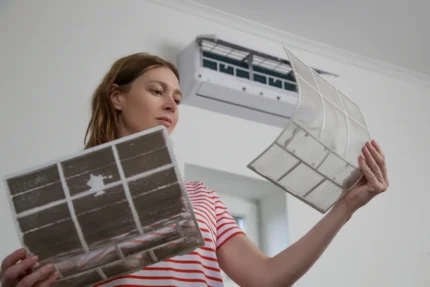
The thing about air conditioning filters is that they’re easy to forget. Out of sight, out of mind, right? But it’s the first line of defense between the air you breathe and all the dust, pollen, pet dander, and other particles floating around.
We’ve seen what happens when AC filters get neglected at Kombi’s Heating and Cooling. It’s not pretty. A clogged or dirty filter can turn a small problem into an expensive repair faster than you’d think.
Every time your system kicks on, air gets pulled through the filter before moving through the rest of the equipment. That filter catches all the stuff you don’t want floating around: dust, dirt, allergens, and even some bacteria.
Without a working filter, all that gunk goes straight into your system. It builds up on the coils, clogs the moving parts, and makes your AC work way harder than it should. And when your system has to work harder, a few things happen. Your energy bills go up. Your home doesn’t cool as well. And parts start to wear out faster.
Thankfully, regular AC filter replacement is one of the easiest things you can do to protect your system and keep your family comfortable.
Different Types of AC Filters
Not all AC filters are created equal. When you head to the hardware store, you’ll see a whole wall of options, and it can feel overwhelming. Let’s simplify it:
- Fiberglass filters are the most basic and cheapest option. They catch large particles like dust and lint, but they don’t do much for smaller stuff like pollen or pet dander. If you’re just looking for basic protection for your system, these will work. But if air quality is a concern, you’ll want something better.
- Pleated filters have more surface area because of the folds in the material. That means they can trap smaller particles and last a bit longer than fiberglass. They’re a solid middle-ground option for most homes.
- Electrostatic filters use static electricity to attract particles. Some are disposable, and some are washable and reusable. The washable ones can save you money over time, but you have to stay on top of cleaning them regularly.
- HEPA filters are the gold standard for air filtration. They can capture up to 99.97% of particles, including really tiny ones. However, not every residential AC system can handle a true HEPA filter because they restrict airflow quite a bit. If you’re interested in HEPA-level filtration, give us a call and we can talk about whether your system can support it or if there’s a better solution for your home.
Best Filters by Common Concerns
- If You Have Pets: Pet hair and dander can really build up in your home, especially during shedding season. A pleated filter with a MERV 8 to MERV 11 rating will help capture that dander before it circulates through your system and back into your living space. You may also need to replace your filter more often than the average homeowner, so keep an eye on it.
- If You Have Allergies: Pollen, dust mites, and mold spores can make life miserable for allergy sufferers. A MERV 11 or MERV 13 filter can help trap these smaller particles and keep them out of your air. Pairing a good filter with regular AC air filter replacement can make a noticeable difference in how you feel at home.
- If Wildfire Smoke Is a Concern: Living in the Pacific Northwest means dealing with wildfire smoke, sometimes for weeks at a time. A MERV 13 filter is your best bet for keeping smoke particles out of your indoor air. When air quality alerts go up, it’s also a good idea to check your filter more frequently and replace it if it’s getting clogged faster than usual.
- If You Want Better Energy Efficiency: It might seem backward, but using the right filter can actually help your system run more efficiently. A clean filter that matches your system’s specs allows air to flow freely, which means your AC doesn’t have to work as hard. That translates to lower energy bills and less wear on your equipment.
What Are MERV 13 Filters (& Do I Need One)?
Minimum Efficiency Reporting Value (MERV) is basically a rating system that tells you how well a filter captures particles. The scale runs from 1 to 20, with higher numbers meaning better filtration. MERV 13 filters are denser than standard filters, which means they can restrict airflow more. Most modern systems can handle them just fine, but older or less powerful units might struggle.
MERV 13 filters have gotten a lot of attention in the last few years, especially here in the Pacific Northwest. And for good reason. These filters can capture particles as small as 0.3 microns, which includes things like smoke, bacteria, and even some viruses.
If you’ve lived through a wildfire season, you know how important that can be. When the smoke rolls in and the air quality drops, a MERV 13 filter can make a real difference in how your home feels. It won’t make your indoor air perfect, but it can significantly reduce the amount of smoke particles circulating through your house.
For most homes in our area, we recommend at least a MERV 8 or MERV 11 filter for everyday use. If you have pets, allergies, or you’re dealing with wildfire smoke, stepping up to a MERV 13 is worth considering. But if you’re not sure whether your system is up for it, that’s something we can check during a tune-up or service call. The last thing you want is to install a high-efficiency filter and end up causing other problems.

Ready to Get Started?
Reach out to us today, and we’ll get back to you as soon as possible. Just fill out our contact form or give us a call.

"*" indicates required fields

How Often Should I Replace My AC Filter?
For most homes, replacing your air conditioning filter every 30 to 90 days is ideal. But if you have a basic one-inch fiberglass filter, you’re probably looking at the shorter end of that range. Thicker pleated filters can sometimes go a bit longer.
Here are some other things that might mean you need to replace your filter more often:
- You have pets in the home. Pet hair and dander can clog a filter faster than you’d expect, especially if you have multiple animals or breeds that shed heavily.
- Someone in your household has allergies or asthma. Keeping a fresh filter in place helps maintain better air quality, which can reduce symptoms.
- You run your AC constantly. The more your system runs, the more air passes through the filter, and the faster it fills up.
- You live in an area with a lot of dust, construction, or wildfire smoke. Environmental factors can speed up how quickly your filter gets dirty.
How to Replace Your AC Filter
- Turn off your AC system. This keeps air from blowing while you’re working and prevents any unfiltered air from getting through.
- Remove the old filter. Take note of which direction the arrows on the frame are pointing. Those arrows indicate the direction of airflow, and it’s important to install the new filter the same way. Air should flow toward the system, so the arrow typically points toward the ductwork or air handler.
- Slide the new filter into place, making sure it fits snugly and the arrows are pointing in the right direction. If the filter is too small and there are gaps around the edges, air will bypass the filter entirely, which defeats the purpose.
- Turn your system back on and make a note of when you changed the filter. Some people write the date on the filter frame with a marker, or you can set a reminder on your phone for next time.
How a Dirty Filter Can Hurt Your System
When your filter is clogged, airflow gets restricted. Your system has to push harder to move air through, which puts extra strain on the blower motor. Over time, that strain can cause the motor to overheat or fail. And replacing a blower motor is a lot more expensive than swapping out a filter.
A dirty filter can also cause your evaporator coils to freeze up. When there’s not enough warm air moving over those coils, condensation builds up and turns to ice. That means your AC can’t cool your home properly, and you’re stuck waiting for everything to thaw out before it works again.
A clogged filter can mess with your indoor air quality. All those particles that should be trapped in the filter? They end up circulating through your home instead. That’s bad news if anyone in your family deals with allergies, asthma, or other respiratory issues.
When to Call a Professional
Changing your filter is something most homeowners can handle on their own. But there are times when it makes sense to bring in a professional. For instance, if you’ve been replacing your filter regularly and you’re still noticing poor airflow, weak cooling, or rising energy bills, there might be something else going on.
Issues with your ductwork, refrigerant levels, or other components can also affect performance. If your filter is getting dirty unusually fast, that could be a sign of a bigger problem, too. It might mean there’s a leak in your ductwork pulling in extra dust, or that your system is running more than it should because of an efficiency issue.
At Kombi’s Heating and Cooling, we’re always happy to answer questions, even if it’s something simple. We’d rather help you troubleshoot over the phone than have you dealing with a bigger problem later.
Kombi’s Heating and Cooling’s $99 Tune Up Special
Our $99 Tune-Up Special is designed to give your system a thorough check-up and make sure everything is in good shape. Here’s what’s included:
- Full System Inspection: We’ll take a close look at all the major components of your AC to make sure everything is working the way it should.
- Filter Replacement: We’ll swap out your old filter for a fresh one, so you don’t have to worry about it.
- Component Cleaning: Dust and debris can build up on coils and other parts over time. We’ll clean things up to help your system run more efficiently.
- Efficiency Testing & Adjustments: We’ll check your system’s performance and make any small adjustments needed to keep it running at its best.
- Honest Recommendations: If we notice anything that needs attention, we’ll let you know. No pressure, no upselling. Just straightforward information so you can make the best decision for your home.
Trust Kombi’s Heating and Cooling for Your AC Needs
If it’s been a while since you changed your air conditioning filter, now’s a great time to take care of it. Or if you’re not sure where to start or you’d rather have a pro handle it, give us a call. We’re happy to help.
Kombi’s Heating and Cooling offers 24/7 emergency service with no after-hours or weekend fees. When your system goes down in the middle of the night or during a heatwave, we’ll be there.
We also provide free estimates with no obligations. If you’re wondering whether it’s time for a repair or a replacement, we’ll give you an honest assessment and help you weigh your options. No surprises, no pressure.
Reach out to us today, and we’ll get back to you as soon as possible. Just fill out our contact form here or give us a call at 971-201-2513.